25.12.2025 • 27 min read
Import and Export Business in Switzerland: Analysis and Statistics
Switzerland's role in global trade extends beyond chocolate and watches. The country functions as a critical hub where pharmaceutical innovation, precision engineering, and financial stability converge to create one of the world's most resilient export economies.
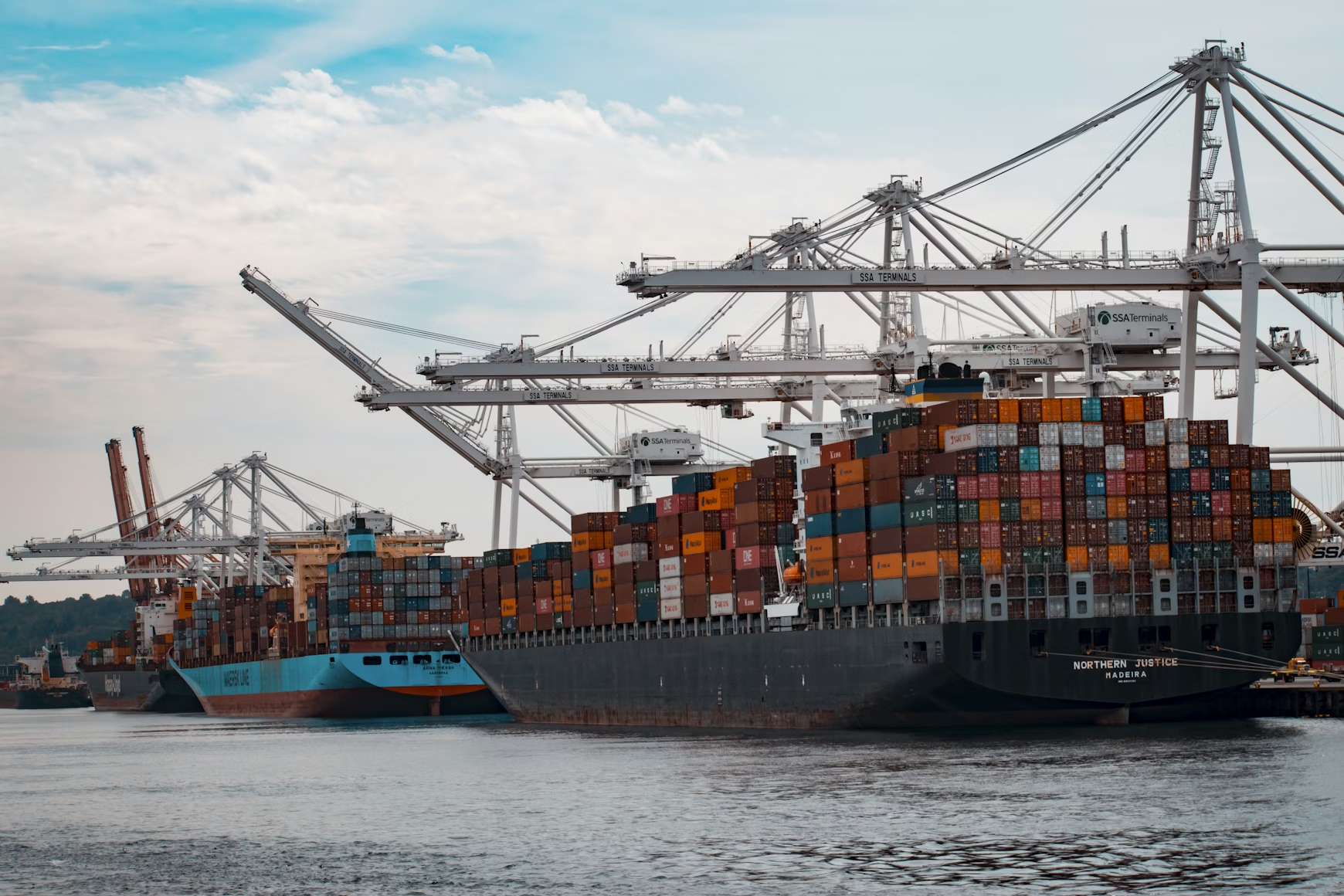
Switzerland's role in global trade extends beyond chocolate and watches. The country functions as a critical hub where pharmaceutical innovation, precision engineering, and financial stability converge to create one of the world's most resilient export economies. For international entrepreneurs and investors, understanding Switzerland's trade architecture means accessing a market that generated CHF 282.9 billion in exports during 2024—a 3.2% year-over-year increase despite global headwinds.
This analysis examines the complete Swiss environment import-export operations, from regulatory frameworks to investment opportunities. Whether you're considering establishing a GmbH for cross-border e-commerce or evaluating pharmaceutical sector investments, the data presented here provides the foundation for informed decision-making in one of Europe's most stable jurisdictions.
"Switzerland's trade surplus consistently demonstrates the country's competitive advantage in high-value manufacturing. The October 2025 surplus of CHF 2.6 billion reflects not just export strength, but the structural resilience of Swiss industry against currency fluctuations and regulatory shifts." — Markus Pritzker, SwissFirma
Key takeaways:
- Export volume: CHF 282.9 billion (2024), with monthly exports averaging CHF 22.5 billion in late 2025.
- Core export sectors: Pharmaceuticals and chemicals (52% of total exports), watches (7%), machinery and electronics (11%).
- Primary partners: Germany (15% of exports), USA (14%), United Kingdom (9%), China (7%), France (6%). EU accounts for approximately 50% of total trade.
- Trade balance: Consistently positive, with CHF 60.6 billion surplus in 2024, indicating strong export competitiveness.
- Investment appeal: High stability, innovation leadership, and strategic positioning in high-tech niches create opportunities across biotech, greentech, and digital trade sectors.
Disclaimer: This material provides general information on Switzerland's import-export sector and does not constitute legal, tax, or financial advice. Trade regulations, tariff rates, and quotas are subject to change. Consult qualified professionals before making business or investment decisions.
What does Switzerland export? An overview of key sectors
Switzerland's export portfolio reflects decades of specialisation in high-value, innovation-intensive industries. The country's main exports centre on products where Swiss engineering precision and regulatory compliance create competitive advantages that competitors struggle to replicate.
Chemical and pharmaceutical products dominate the export environment, accounting for CHF 149 billion in 2024—representing 52% of total exports. Within this category, immunological products alone generated CHF 52 billion, followed by medicaments and heterocyclic compounds. This concentration reflects Switzerland's position as home to pharmaceutical giants like Novartis and Roche, whose global supply chains route through Swiss manufacturing facilities.
The precision instruments sector, including Switzerland's iconic watch industry, contributed 7% of exports. Despite facing headwinds from digital alternatives, Swiss watches maintain premium positioning through craftsmanship that commands price points competitors cannot match. The Federation of the Swiss Watch Industry reported CHF 25.993 billion in watch exports during 2024, down 2.8% year-over-year.
Machinery and electronics add another 11% combined, with electrical machinery and equipment accounting for 4% and mechanical appliances for 7%. These categories show more stability than luxury goods, as they serve industrial rather than consumer demand. Nuclear reactors, boilers, and specialised machinery form the core of this category.
Beyond these traditional strengths, Swiss exports include precious metals and stones (often re-exports through Swiss trading hubs), optical and medical instruments, and specialised chemicals. The common thread: products where Swiss quality standards, intellectual property protections, and manufacturing precision justify premium pricing in global markets.


Switzerland's core imports: machinery, chemicals, and more
Switzerland's import profile reveals the inputs required to sustain its high-tech manufacturing base. The country imports CHF 222.3 billion annually (2024 data), with the composition reflecting both industrial needs and consumer demand in a wealthy economy.
Machinery and equipment form the largest import category by industrial significance. Swiss manufacturers import specialised production equipment, electronic components, and transport vehicles to maintain their technological edge. In October 2025, machinery imports showed particular strength, with cars increasing 5.5% month-over-month and metals rising 1%.
Chemical products and raw materials constitute another critical import stream. While Switzerland exports finished pharmaceuticals, it imports chemical precursors, organic compounds, and specialised materials that feed into its pharmaceutical and chemical manufacturing processes. This creates a value-added cycle where imported inputs undergo transformation into high-margin export products.
Energy products represent a structural import necessity. Switzerland's limited domestic energy resources mean the country depends on external suppliers for petroleum products and electricity. Energy imports showed an 11.6% increase in recent periods, reflecting both consumption patterns and the country's ongoing energy transition challenges.
The import mix also includes consumer goods serving Switzerland's affluent population, agricultural products (given limited arable land), and intermediate goods for re-export through Swiss trading companies. Intermediate goods dominate at 45.39% of total imports, underscoring Switzerland's role as both a manufacturing hub and a trading intermediary in European commerce.
Statistics and structure of Switzerland's foreign trade
Understanding the quantitative dimensions of Swiss trade requires examining both the scale of operations and the structural composition that drives these flows. The data reveals patterns that have remained remarkably consistent even as global trade conditions fluctuate.
Switzerland's top exports and imports by value
The value distribution across export categories demonstrates Switzerland's specialisation strategy. In 2024, the Federal Customs Administration reported the following structure:
| Category | Export share (%) | Import share (%) |
|---|---|---|
| Pharmaceuticals & chemicals | 52 | ~30 |
| Watches & precision instruments | 7 | ~2 |
| Machinery & electronics | 11 | ~15 |
| Precious metals & stones | ~20 | ~27 |
| Other | 10 | 26 |
Pharmaceutical and chemical products led exports at 52% of total value, translating to approximately CHF 147 billion. This concentration creates both opportunity and risk—opportunity because these products command premium margins, risk because regulatory changes in key markets can significantly impact overall export performance.
Watches and precision instruments, despite representing only 7% by value, carry outsized importance for Switzerland's brand identity. The CHF 25.993 billion in watch exports during 2024 demonstrates the sector's vulnerability to luxury spending cycles.
On the import side, intermediate goods dominate at 45.39% of total imports. This reflects Switzerland's position as a manufacturing economy that transforms imported inputs into higher-value exports.
Switzerland's main trade partners for exports and imports
Geographic concentration in Swiss trade reveals the country's deep integration with European markets while maintaining significant transatlantic and Asian connections. October 2025 data shows the following partner distribution:
| Country | Export share (%) | Import share (%) |
|---|---|---|
| Germany | 15 | 21 |
| USA | 14 | 7 |
| United Kingdom | 9 | 6 |
| China | 7 | 6 |
| France | 6 | 7 |
| Italy | ~5 | 8 |
| Austria | ~3 | 3 |
| UAE | ~2 | 5 |
| Ireland | ~2 | 3 |
| Japan | ~2 | ~2 |
Germany maintains its position as Switzerland's primary trading partner, accounting for 15% of exports and 21% of imports. This relationship reflects geographic proximity, shared language regions, and deep supply chain integration.
The United States represents Switzerland's second-largest export market at 14% of total exports, driven primarily by pharmaceutical products. The bilateral relationship generated $52 billion in goods exports during 2023, with a $25 billion trade surplus favoring Switzerland.
China's 7% share of Swiss exports reflects both opportunity and complexity. While Chinese demand for Swiss luxury goods and precision instruments remains strong, regulatory uncertainties and geopolitical tensions create execution risks for companies expanding in this market.
The European Union collectively represents approximately 50% of Swiss exports and two-thirds of imports. This concentration underscores why bilateral agreements with the EU remain critical to Swiss trade policy, even as the country maintains its non-EU status.
Trade balance dynamics over the past decade
Switzerland's trade surplus has remained consistently positive from 2015 through 2024, averaging 5.04% of GDP. This stability reflects structural advantages rather than temporary market conditions.
| Year | Exports (billion CHF) | Imports (billion CHF) | Trade balance (billion CHF) |
|---|---|---|---|
| 2015 | ~290 | ~240 | ~50 |
| 2016 | ~295 | ~245 | ~50 |
| 2017 | ~305 | ~250 | ~55 |
| 2018 | ~315 | ~260 | ~55 |
| 2019 | ~320 | ~265 | ~55 |
| 2020 | ~310 | ~255 | ~55 |
| 2021 | ~340 | ~275 | ~65 |
| 2022 | ~360 | ~290 | ~70 |
| 2023 | 378 | 329 | 49 |
| 2024 | ~383 | ~322 | ~61 |
The 2024 surplus of CHF 60.6 billion represents a slight decline from 2023's CHF 97.8 billion (measured in USD terms by IMF data), but this variation reflects currency valuation effects and timing of large transactions rather than fundamental weakness. Monthly data shows the surplus fluctuating between CHF 2.6 billion (October 2025) and a peak of CHF 10.6 billion (February 2025).
Several macroeconomic factors sustain this positive balance. The strong Swiss franc, while creating headwinds for exporters, also reflects confidence in Swiss economic management and reduces import costs. Switzerland's focus on high-value products means export revenues remain sound even when volumes face pressure.
For investors, this consistent surplus indicates that Swiss export industries generate reliable foreign currency earnings, supporting both corporate profitability and the broader economy's ability to service international obligations.
Trade in services
Services trade in Switzerland accounts for roughly a quarter of exports and a third of imports (2023). Banking, insurance and licensing drive the services balance.
In 2023, Switzerland exported services totaling $192.4 billion and imported services worth $165.3 billion. This services surplus complements the goods trade surplus, contributing to Switzerland's overall current account strength. The financial sector, centred in Zürich and Geneva, generates significant cross-border service revenues through wealth management, insurance, and commodity trading.
How to start an import-export business with Switzerland: a step-by-step guide
Establishing import-export operations involving Switzerland requires managing a well-defined regulatory framework that prioritizes compliance and transparency. The process differs significantly from less regulated jurisdictions, but this structure creates predictability that reduces long-term operational risks.
Step 1: Market research and business planning
Before initiating formal registration, conduct thorough market analysis to identify your niche. Switzerland's import-export market favours specialised players who understand specific product categories and can manage technical requirements. Develop a detailed business plan covering product selection and sourcing strategy, target markets and customer segments, pricing models accounting for Swiss cost structures, financial projections spanning 3-5 years, and compliance requirements specific to your product category.
Step 2: Company registration
Foreign entrepreneurs typically establish a GmbH (limited liability company) for import-export operations. The GmbH structure requires CHF 20,000 in share capital (fully paid) and offers limited liability protection while maintaining operational flexibility. The registration process involves reserving your company name through the Federal Commercial Register, drafting articles of association with a Swiss notary, depositing share capital in a Swiss bank account, obtaining a UID (enterprise identification number) from the Federal Tax Administration, and registering with the cantonal commercial register (typically 2-6 weeks).
Foreign founders must appoint at least one resident director with Swiss domicile.
Step 3: VAT registration and EORI number
If your annual sales of low-value goods (under CHF 65 per item) exceed CHF 100,000, VAT registration becomes mandatory. The Federal Tax Administration issues VAT numbers following application submission. Standard VAT rate stands at 8.1%, with reduced rates of 2.6% for essential goods like food and medicines.
For trade with EU countries, obtain an EORI (Economic Operators Registration and Identification) number through the customs authority of your first EU trading partner. This number, formatted as the EU country code plus your Swiss VAT number, enables customs clearance across all EU member states.
Step 4: Customs clearance procedures
Switzerland's e-dec electronic customs declaration system handles all import and export declarations. The system requires structured electronic submission of commodity codes (8-digit HS-based classification), supporting documentation (commercial invoices, packing lists, certificates of origin), calculation of applicable duties and VAT, and risk assessment and compliance verification.
The Federal Customs Administration is transitioning to the new Passar platform for transit and export declarations (launched June 2024), while import declarations continue using e-dec until mid-2025. Businesses must register with the Federal Customs Administration and use authorized electronic interfaces or the e-dec Web portal.
Step 5: Logistics and transportation
Select transportation methods based on product characteristics, urgency, and cost considerations. Switzerland's central European location provides access to multiple logistics corridors: road transport via the EU road network (primary method for European trade), rail freight through Alpine tunnels connecting to Italian and German networks, air cargo through Zurich and Geneva airports for time-sensitive shipments, and multimodal solutions combining different transport modes.
Engage freight forwarders experienced in Swiss customs procedures. These partners handle documentation, coordinate with carriers, and ensure compliance with both Swiss and destination country requirements.
Step 6: Regulatory compliance
Compliance extends beyond customs clearance to encompass product standards, labeling requirements, and sector-specific regulations. Key considerations include product certification for regulated categories (electronics, medical devices, food products), labeling in required languages (German, French, or Italian depending on target market), import licenses for restricted goods (certain agricultural products, dual-use items), and sanctions compliance, particularly for trade involving countries under international restrictions.
Switzerland adopted EU sanctions frameworks in 2025, requiring verification against Council Regulation (EU) No 833/2014 for dual-use goods. Pharmaceutical and nuclear fuel exports remain exempt, but other technology exports face enhanced scrutiny.
The timeline from initial planning to first shipment typically spans 6-10 weeks for straightforward cases. Complex product categories or multi-jurisdictional structures may require 3-4 months.
managing Swiss import regulations: duties, quotas, and taxation
Switzerland's import regulatory framework balances trade openness with revenue collection and domestic industry protection. Understanding the specific mechanisms—customs duties, VAT, and non-tariff barriers—enables accurate cost modelling and compliance planning.
Customs duties
Swiss customs duties calculate primarily on gross weight rather than value, creating a distinctive cost structure compared to ad valorem systems used in many countries. The Federal Office for Customs and Border Security publishes rates in the Tares online customs tariff database.
Typical duty rates range from under CHF 1 per kilogram for many e-commerce goods to CHF 12-15 per 100 kilograms for automobiles. The average of tariffs weighted by their corresponding trade value stands at 1.19%. This weight-based system favors high-value, lightweight products—precisely the categories where Swiss manufacturers compete.
The de minimis threshold stands at CHF 5; imports with calculated duties below this amount enter duty-free. This encourages small-value shipments and benefits e-commerce operations shipping directly to consumers.
Bilateral agreements with the EU eliminate duties on most industrial goods originating in EU member states, provided importers present valid EUR.1 certificates of origin. This preferential treatment reflects the deep economic integration between Switzerland and the EU, even absent formal EU membership.
For products from countries with free trade agreements (FTAs), preferential rates apply when proper origin documentation accompanies shipments. Switzerland maintains approximately 30 FTAs through EFTA arrangements, covering 40+ partner countries including Canada, Japan, and South Korea.
VAT on imports
Import VAT applies to all goods entering Switzerland, calculated on the customs value including duties and transportation costs. The standard rate of 8.1% applies to most products, while the reduced rate of 2.6% covers food products and beverages (excluding alcohol), medicines and pharmaceutical products, books, newspapers, and printed materials, and certain agricultural products.
Low-value consignments under CHF 62 incur standard 8.1% VAT, while shipments under CHF 200 containing food or books may qualify for the 2.6% reduced rate. These thresholds create planning opportunities for e-commerce businesses structuring shipment values.
Businesses registered for VAT can reclaim import VAT as input tax, effectively neutralizing the cost for commercial importers. This mechanism ensures VAT functions as a consumption tax rather than a business expense, though it does create cash flow timing considerations.
Import quotas and non-tariff barriers
Tariff quotas apply primarily to agricultural products, protecting Swiss farmers while allowing controlled market access. Recent examples include table eggs (quota increased from 7,500 tons to 24,928 tons for September-December 2024 period), butter (annual quota of 100 tons), beef (500 tons annually from the USA), bison meat (1,000 tons from the USA), and poultry (1,500 tons from the USA).
Imports exceeding quota limits face significantly higher tariff rates, making quota management critical for agricultural traders. The Swiss government adjusts quotas based on domestic supply conditions, creating some uncertainty for long-term planning.
Non-tariff barriers include certification and labeling requirements that vary by product category. Electronics must meet Swiss safety standards, food products require health certifications, and certain chemicals need environmental compliance documentation. These requirements align closely with EU standards due to bilateral agreements, simplifying compliance for products already certified for EU markets.
Official sources:
- Federal Office for Customs and Border Security (FOCBS)
- Tares online customs tariff
- State Secretariat for Economic Affairs (SECO) sanctions information
Switzerland's trade agreements: EU bilateral pacts, WTO membership, and FTAs
Switzerland's international trade framework rests on a complex network of agreements that provide market access while preserving the country's non-EU status. This architecture creates opportunities for businesses that understand how to use preferential treatment across multiple jurisdictions.
Bilateral agreements with the EU
The Bilaterals I package, signed in 1999 and entering force in 2002, established the foundation for Swiss-EU trade relations. Seven agreements cover free movement of persons between Switzerland and EU member states, technical barriers to trade (enabling mutual recognition of product standards), public procurement access for Swiss companies in EU markets, agricultural trade liberalization for specific products, air and road transport rights, and scientific research cooperation.
The technical barriers agreement holds particular significance for exporters. A single Swiss certificate demonstrating EU compliance enables market access across all member states, eliminating redundant testing and certification costs. This mutual recognition extends to most industrial products, though some categories (pharmaceuticals, medical devices) maintain separate approval processes.
Bilaterals II, signed in 2004 and entering force between 2005-2009, added nine agreements covering Schengen/Dublin participation, fraud prevention, and cooperation in education, environment, and statistics. While less directly trade-focused than Bilaterals I, these agreements facilitate business operations through simplified visa procedures and regulatory alignment.
The bilateral framework integrates Switzerland into the EU single market for goods while maintaining Swiss autonomy in other policy areas. This arrangement provides Swiss companies access to a market of 500+ million consumers without the obligations of EU membership, though it requires ongoing negotiation to maintain and update agreements.
EFTA and the FTA network
Switzerland participates in the European Free Trade Association (EFTA) alongside Norway, Iceland, and Liechtenstein. EFTA serves as the framework through which Switzerland normally concludes free trade agreements, negotiating collectively on behalf of member states.
The EFTA-negotiated FTA network includes approximately 30 agreements with 40+ partners. Significant agreements include Japan (Economic Partnership Agreement providing preferential access to the world's third-largest economy), China (FTA eliminating tariffs on most industrial goods), Canada (thorough agreement covering goods, services, and investment protection), and South Korea (preferential treatment for Swiss exports to a major Asian manufacturing hub).
These agreements typically eliminate or reduce tariffs on industrial goods while providing frameworks for services trade and investment protection. For Swiss exporters, FTAs create cost advantages versus competitors from countries without preferential access.
Switzerland also maintains the option to conclude bilateral FTAs outside the EFTA framework when specific circumstances warrant. The flexibility to pursue both collective and individual agreements maximizes Switzerland's ability to secure favorable market access terms.
WTO membership
As a World Trade Organization member since 1995, Switzerland benefits from most-favored-nation treatment in trade with other WTO members. This baseline ensures that even absent specific FTAs, Swiss goods receive non-discriminatory treatment in global markets.
WTO membership also provides dispute resolution mechanisms and participation in multilateral trade negotiations. For a small, export-dependent economy, these multilateral frameworks offer protections that bilateral relationships alone cannot provide.
The combination of WTO membership, EU bilateral agreements, and EFTA FTAs creates a three-tier market access structure. This layered approach provides Swiss businesses with preferential treatment in key markets while maintaining baseline access to the broader global economy.
Investment analysis: risks and opportunities
Evaluating Switzerland's import-export sector from an investment perspective requires balancing the country's structural advantages against specific risk factors that can impact returns. The analysis reveals opportunities in emerging sectors alongside established industries facing headwinds.
Promising export sectors for investment
Biotechnology and MedTech
Beyond the pharmaceutical giants, Switzerland's biotech sector attracted CHF 2.5 billion in investments during 2024, representing a 22% year-over-year increase. Private company investments reached a record CHF 833 million, with companies like Alentis securing CHF 163 million in funding rounds.
The sector generated CHF 7.2 billion in revenues during 2024, with R&D spending totaling CHF 2.6 billion. This investment intensity reflects the long development timelines and regulatory requirements inherent to biotech, but also demonstrates investor confidence in Swiss innovation capabilities.
Medical technology companies benefit from Switzerland's precision manufacturing heritage and regulatory expertise. The country's familiarity with stringent approval processes (Swiss, EU, and FDA) positions MedTech firms to manage global markets more effectively than competitors from less regulated environments.
Green technologies
Switzerland's commitment to sustainability creates opportunities in clean energy, recycling, and energy efficiency technologies. While thorough investment data for this sector remains limited in available sources, the country's high energy import dependence (11.6% increase in energy imports during recent periods) creates domestic demand for alternatives.
Swiss engineering expertise in precision manufacturing translates well to renewable energy components, energy storage systems, and efficiency optimisation technologies. The combination of domestic demand, export potential to EU markets pursuing similar sustainability goals, and government support for green initiatives positions this sector for growth.
Digital trade and fintech
Switzerland's stable legal framework and advanced IT infrastructure support digital commerce and financial technology development. The country's banking sector, despite challenges, maintains global significance—Swiss banking brands showed 11% brand value growth to USD 20.7 billion in 2025.
Fintech companies benefit from proximity to traditional financial institutions, access to capital, and a regulatory environment that balances innovation with consumer protection. The combination creates opportunities for companies developing payment systems, blockchain applications, and cybersecurity solutions.
Key export companies on the Swiss stock exchange (SIX)
Direct investment in publicly traded Swiss exporters provides exposure to the country's trade performance through established companies with proven business models. SwissHoldings members hold 62% of SIX market capitalization as of February 2025, with CHF 1,288 billion in capital stock invested abroad.
| Company | SIX Ticker | Sector | Export Focus |
|---|---|---|---|
| Nestlé S.A. | NESN | Food & Beverages | Global food products exported via direct foreign investments; operates in 180+ countries |
| Novartis AG | NOVN | Pharmaceuticals | Worldwide pharmaceutical exports; faces potential US tariff exposure but maintains pricing power |
| Roche Holding AG | ROG | Pharmaceuticals | International drug exports; top SIX-listed company by market cap; strong oncology and diagnostics portfolio |
| ABB Ltd | ABBN | Engineering/Technology | Global automation and electrification technology exports; Industry 4.0 solutions for manufacturing |
| Richemont | CFR | Luxury Goods | Worldwide luxury goods exports including Cartier, Van Cleef & Arpels; exposure to Asian luxury demand |
These companies represent different risk-return profiles. Pharmaceutical exporters offer defensive characteristics with relatively stable demand, while luxury goods companies show greater cyclicality tied to global wealth creation. Industrial companies like ABB provide exposure to manufacturing investment cycles and infrastructure spending.
Analysis of potential risks for investors
Currency fluctuations
The strong Swiss franc creates a persistent headwind for exporters. The Swiss National Bank's interventions since late 2023, selling francs to support exporters by maintaining EUR/CHF above 0.9200, demonstrate the ongoing nature of this challenge.
For investors, franc strength cuts both ways. It reduces the CHF-denominated value of foreign earnings when repatriated, pressuring reported revenues and profits. However, it also reflects confidence in Swiss economic management and provides a hedge against global instability.
Zurich Cantonal Bank forecasts EUR/CHF at 0.91 and USD/CHF at 0.87 over the next 12 months from 2025, suggesting continued pressure. High-tech exports like pharmaceuticals show less price sensitivity than commodity products, partially mitigating currency impacts for quality-focused sectors.
Regulatory dependence on the EU
Any deterioration in Swiss-EU bilateral relations could significantly impact market access for Swiss exporters. The EU represents approximately 50% of Swiss exports, making this relationship critical to trade performance.
Ongoing negotiations over updating bilateral agreements create uncertainty. While both sides have strong incentives to maintain the current framework, political dynamics in EU member states and Switzerland can shift, potentially disrupting established arrangements.
For investors, this regulatory risk requires monitoring political developments and assessing company-specific exposure to EU markets. Diversified exporters with significant non-EU revenue streams carry lower risk than companies heavily concentrated in European sales.
Competitive pressures
Swiss companies compete globally against both established multinationals and emerging market challengers. The country's high cost structure—driven by elevated wages, real estate costs, and regulatory compliance expenses—requires continuous innovation to justify premium pricing.
In pharmaceuticals, patent expirations and biosimilar competition pressure pricing power. In watches and luxury goods, changing consumer preferences and digital alternatives create structural challenges. In machinery and electronics, Asian manufacturers increasingly match Swiss quality at lower price points.
These competitive dynamics mean Swiss exporters cannot rely on historical advantages indefinitely. Investment analysis must assess each company's innovation pipeline, brand strength, and ability to maintain differentiation as competitive intensity increases.
Trade policy uncertainty
The November 2025 US decision to cap additional tariffs on Swiss imports at 15% (down from an initially threatened 39%) demonstrates how trade policy shifts can rapidly alter export economics. While the final outcome proved favorable, the episode illustrates vulnerability to policy changes in major markets.
The IMF projects 1.2% GDP growth for Switzerland in 2026 if trade tensions remain unresolved. Conversely, the Swiss government raised its 2026 growth forecast to 1.1% following the tariff reduction, showing how policy outcomes directly impact economic projections.
For investors, trade policy risk requires scenario analysis across different tariff and market access assumptions. Companies with geographic diversification and products facing inelastic demand show greater resilience to policy shocks than those concentrated in single markets or discretionary categories.
Switzerland–US bilateral trade (2024)
The United States represents a critical market for Swiss exporters, with bilateral trade totaling $188.0 billion in 2024. U.S. goods and services trade with Switzerland totaled an estimated $188.0 billion in 2024, up 10.4 percent ($17.7 billion) from 2023.
Breaking down the components: U.S. goods exports to Switzerland totaled $25.0 billion (down 9.9% from 2023), U.S. goods imports from Switzerland reached $63.3 billion (up 21.1% from 2023), U.S. goods trade deficit with Switzerland stood at $38.3 billion (up 56.1% from 2023), U.S. services exports to Switzerland totaled $64.7 billion (up 14.6% from 2023), U.S. services imports from Switzerland reached $35.0 billion (up 3.6% from 2023), and U.S. services trade surplus with Switzerland stood at $29.7 billion (up 30.9% from 2023).
This bilateral relationship demonstrates Switzerland's strong position in both goods (particularly pharmaceuticals and precision instruments) and services (financial services, insurance, licensing). The services surplus partially offsets the goods deficit from the U.S. perspective, while Swiss exporters benefit from stable demand in the world's largest economy.
Why Switzerland's stable economy is a cornerstone for international trade and investment
Switzerland's economic stability functions as the foundation supporting its trade performance and investment attractiveness. This stability manifests across multiple dimensions that collectively create a low-risk environment for long-term business operations.
The IMD World Competitiveness Ranking 2025 places Switzerland first among 67 economies, citing stable political structures, effective governance, and strong infrastructure as key factors enabling the country to absorb economic shocks while attracting investments. This top ranking reflects not just current performance but institutional frameworks that have delivered consistency across decades.
Political stability in Switzerland stems from its consensus-based governance model and direct democracy mechanisms. Major policy shifts require broad support, creating predictability for businesses planning multi-year investments. The country's neutrality and absence from major military alliances further reduces geopolitical risk exposure.
The Swiss franc's role as a safe-haven currency reflects global confidence in Swiss economic management. While this creates export challenges through currency appreciation, it also signals that international investors view Switzerland as a reliable store of value during periods of global uncertainty.
Low inflation—projected at 0.2% for 2025 according to SECO economic forecasts—preserves purchasing power and enables accurate long-term financial planning. Combined with unemployment rates consistently below EU averages, this macroeconomic stability supports both consumer demand and business investment.
"Switzerland's financial sector has long been synonymous with strength and stability. The country ranks first for investment recommendation in the Brand Finance Global Soft Power Index 2025, reflecting how banking sector resilience translates into broader economic confidence." — Marco Casanova, Chair Brand Finance Switzerland
The regulatory environment balances business-friendly policies with consumer and environmental protections. Switzerland's tax system, while not the lowest in absolute terms, offers predictability and transparency that reduces compliance risks. The country's network of double taxation treaties (over 105 ratified agreements) facilitates international operations while preventing excessive tax burdens.
For international trade specifically, stability manifests in consistent application of customs procedures, reliable infrastructure (roads, rail, ports), and efficient administrative processes. The transition from e-dec to the Passar customs platform, while requiring adaptation, follows a structured timeline with clear communication—exemplifying how Swiss authorities manage change.
Educational excellence and innovation capacity sustain Switzerland's competitive position. High R&D spending (CHF 2.6 billion in biotech alone during 2024) and strong university-industry collaboration ensure continuous development of exportable innovations.
This multi-dimensional stability creates a business environment where companies can plan long-term investments with confidence, knowing that political upheaval, currency crises, or regulatory chaos are unlikely to disrupt operations. For investors evaluating Swiss trade exposure, this stability premium justifies valuations that might appear elevated compared to higher-risk jurisdictions.
Sources and methodology
This analysis draws on data and reports from official and authoritative sources to ensure accuracy and reliability. The following organisations provided the statistical foundation and regulatory information:
- Federal Office for Customs and Border Security (FOCBS): Official Swiss customs statistics, tariff information, and regulatory guidance (www.bazg.admin.ch)
- State Secretariat for Economic Affairs (SECO): Economic forecasts, trade policy information, and FTA documentation (www.seco.admin.ch)
- Swiss Federal Statistical Office (BFS/FSO): thorough foreign trade statistics and annual reports (www.bfs.admin.ch)
- The Observatory of Economic Complexity (OEC): Trade data visualization and economic complexity analysis (oec.world)
- UN Comtrade Database: Bilateral trade flow data for international comparisons (comtrade.un.org)
- SIX Swiss Exchange: Market capitalization data and company information for publicly traded exporters (six-group.com)
- Trading Economics: Monthly trade statistics and economic indicators (tradingeconomics.com)
- World Bank WITS: Merchandise trade data and tariff analysis (wits.worldbank.org)
- Swiss Biotech Association and EY: Swiss Biotech Reports 2024 and 2025 for sector-specific investment data
- Brand Finance: Banking sector brand valuations and soft power index rankings
- IMD World Competitiveness Center: Competitiveness rankings and analysis
- PwC Switzerland: Bilateral trade analysis and investment outlook reports
- USTR (United States Trade Representative): Bilateral trade statistics for Switzerland-US trade
- CEIC Data: Monthly trade balance and economic indicators
- Federal Department of Foreign Affairs (FDFA): Official trade policy and partner information
Data collection focused on the most recent available information (2023-2025) to ensure relevance for current decision-making. Where historical trends required analysis, data series extending to 2015 provided sufficient depth to identify structural patterns versus temporary fluctuations.
Methodology prioritized official government sources and international organisations over secondary reporting to minimize interpretation errors. Where sources presented conflicting figures, preference went to the most recent official publication or the source closest to primary data collection.
Currency conversions between CHF and USD reflect average exchange rates for the relevant reporting periods. Percentage calculations and growth rates derive from the underlying absolute values provided by source organisations, with rounding to one decimal place for readability while maintaining analytical precision.
What is Switzerland's main export product?
Pearls, precious stones, metals, and coins constitute the largest export category by value, accounting for 30.7% ($136.94 billion) of Switzerland's total $446.84 billion in goods exports during 2024. However, pharmaceutical products represent the most significant manufactured export at 24.7% ($110.37 billion), reflecting Switzerland's specialisation in high-value chemical and pharmaceutical production.
The dominance of precious metals partly reflects Switzerland's role as a global trading hub for gold and other commodities, with significant re-export activity. When examining manufactured exports specifically, pharmaceuticals and chemicals clearly lead, demonstrating Switzerland's competitive advantage in innovation-intensive industries.
What is Switzerland's trade balance?
Switzerland maintained a trade surplus of CHF 49 billion in 2023, with exports totaling CHF 378 billion and imports CHF 329 billion according to official Swiss government data. This positive balance means Switzerland exports more goods and services than it imports, generating net foreign currency earnings.
The surplus reflects Swiss competitiveness in high-value products that command premium prices globally. Monthly data shows fluctuation—October 2025 recorded a CHF 2.6 billion surplus, while February 2025 reached CHF 10.6 billion—but the consistent positive trend over decades demonstrates structural export strength rather than temporary market conditions.
Who is Switzerland's main trading partner?
The European Union collectively represents Switzerland's most important trading partner, accounting for approximately 50% of goods exports (CHF 274 billion in 2023) and two-thirds of imports. Within the EU, Germany leads as the single largest partner at 15% of exports and over 25% of imports.
Beyond the EU, the United States ranks as the second-largest individual country partner at 14% of exports (18% in 2023 annual data), followed by the United Kingdom at 9% and China at 7%. This geographic distribution demonstrates Switzerland's balanced approach, maintaining deep European integration while cultivating significant transatlantic and Asian relationships.
Do I need to pay customs duties when importing from the EU to Switzerland?
Customs duties on imports from the EU to Switzerland are reduced or eliminated for most industrial goods under bilateral agreements between Switzerland and the EU, provided proper origin documentation (EUR.1 certificates) accompanies shipments. However, VAT on imports remains mandatory regardless of origin.
The standard VAT rate of 8.1% applies to most products, calculated on the customs value including any applicable duties and transportation costs. Reduced VAT rates of 2.6% apply to essential goods like food, medicines, and books. Even when customs duties are zero, importers must still complete customs declarations and pay applicable VAT, creating administrative and cash flow considerations for cross-border trade.
What are the main steps to start an import-export business in Switzerland?
Starting an import-export business in Switzerland involves six key steps: market research and business planning (develop a detailed 3-5 year business plan with product selection, target markets, pricing models, and compliance requirements), company registration (establish a GmbH with CHF 20,000 share capital, appoint a resident director, and register with cantonal authorities), VAT registration (register for VAT if annual low-value goods sales exceed CHF 100,000; obtain EORI number for EU trade), customs clearance setup (register with Federal Customs Administration for e-dec/Passar electronic declaration systems), logistics arrangement (select transportation methods and engage experienced freight forwarders), and regulatory compliance (obtain product certifications, import licenses, and ensure sanctions compliance).
The timeline typically spans 6-10 weeks for straightforward cases, with complex product categories requiring 3-4 months.
How are customs duties calculated in Switzerland?
Swiss customs duties calculate primarily on gross weight (including packaging) rather than value, with rates published in the Tares online database at www.tares.ch. Typical rates range from under CHF 1 per kilogram for e-commerce goods to CHF 12-15 per 100 kilograms for automobiles.
The de minimis threshold stands at CHF 5—imports with calculated duties below this amount enter duty-free. This weight-based system favors high-value, lightweight products. Bilateral agreements with the EU eliminate duties on most industrial goods with proper EUR.1 origin certificates, while FTA partners receive preferential rates with appropriate documentation.
What is the EORI number and do I need one?
The EORI (Economic Operators Registration and Identification) number is a unique identifier required for customs operations with EU countries. Swiss companies trading with the EU must obtain an EORI number through the customs authority of their first EU trading partner.
The number format combines the EU country code with your Swiss VAT number and remains valid across all EU member states once issued. While Switzerland uses its UID (enterprise identification number) for domestic customs operations, the EORI number is essential for EU trade facilitation and customs clearance.
What products require special import licenses in Switzerland?
Special import licenses are typically required for food products (dairy, meat, fish, vegetables, fruit, livestock—general import permit from Federal Office for Agriculture), agricultural goods (products subject to tariff quotas such as eggs, butter, certain meats), animals and animal products (inspection by Swiss Food Safety and Veterinary Office), plants (certain types require phytosanitary certificates), dangerous goods (firearms, explosives, certain chemicals), and dual-use items (technology and equipment with potential military applications, subject to EU sanctions framework).
The specific requirements depend on product category and country of origin. Consult the Federal Office for Customs and Border Security (www.bazg.admin.ch) for detailed product-specific regulations.
How long does customs clearance take in Switzerland?
Customs clearance timeframes in Switzerland vary by transportation mode: road transport (declaration required within 24 hours), water transport (declaration required within 48 hours), rail transport (declaration required within 7 days), and air transport (declaration required within 7 days).
Electronic submission through e-dec or Passar systems enables faster processing. Businesses with authorized economic operator status and pre-cleared documentation can achieve same-day clearance for routine shipments. Complex cases requiring additional verification or physical inspection may take several days.
What are Switzerland's main free trade agreements?
Switzerland maintains approximately 30 free trade agreements through EFTA (European Free Trade Association) arrangements, covering 40+ partner countries. Key agreements include EU (bilateral agreements eliminating tariffs on most industrial goods—1972 FTA plus Bilaterals I and II), EFTA partners (Norway, Iceland, Liechtenstein—free trade within EFTA), Japan (Economic Partnership Agreement covering thorough goods, services, investment), China (FTA eliminating tariffs on most industrial goods), Canada (thorough agreement covering goods, services, investment protection), and South Korea (preferential treatment for Swiss exports).
These agreements typically eliminate or reduce tariffs on industrial goods while providing frameworks for services trade and investment protection. Switzerland also maintains WTO membership, ensuring most-favored-nation treatment in markets without specific FTAs.
How does the strong Swiss franc affect export competitiveness?
The strong Swiss franc creates both challenges and advantages for exporters. On the negative side, franc appreciation reduces the competitiveness of Swiss products in foreign markets by making them more expensive in local currency terms. This particularly affects price-sensitive sectors like machinery and consumer goods.
However, the franc's strength also reflects confidence in Swiss economic management and provides a hedge against global instability. High-tech exports like pharmaceuticals show less price sensitivity due to quality differentiation and inelastic demand. The Swiss National Bank actively intervenes to support exporters, selling francs to maintain EUR/CHF above 0.9200 since late 2023.
For investors, currency risk requires scenario analysis and assessment of company-specific exposure. Diversified exporters with pricing power in premium segments show greater resilience to franc fluctuations than commodity-focused competitors.
What investment opportunities exist in Switzerland's export sectors?
Promising investment opportunities in Swiss export sectors include biotechnology and MedTech (CHF 2.5 billion invested in 2024, up 22% YoY, with strong R&D pipeline and regulatory expertise), green technologies (growing demand for clean energy, recycling, and efficiency solutions driven by sustainability commitments), digital trade and fintech (stable legal framework and advanced IT infrastructure supporting payment systems, blockchain, and cybersecurity), and publicly traded exporters (companies like Nestlé, Novartis, Roche, ABB, and Richemont on SIX Swiss Exchange).
Each sector offers different risk-return profiles. Pharmaceutical exporters provide defensive characteristics with stable demand, while luxury goods show greater cyclicality. Industrial companies offer exposure to manufacturing investment cycles.
What are the main risks for investors in Swiss export companies?
Key risks include currency fluctuations (strong franc reduces CHF-denominated value of foreign earnings; ZKB forecasts EUR/CHF at 0.91 and USD/CHF at 0.87 over next 12 months), regulatory dependence on EU (50% of exports go to EU; any deterioration in bilateral relations could impact market access), competitive pressures (high cost structure requires continuous innovation; patent expirations in pharma, changing preferences in luxury, and Asian competition in machinery create challenges), and trade policy uncertainty (US tariff threats capped at 15% in Nov 2025 demonstrate vulnerability to policy shifts in major markets).
Investors should assess company-specific exposure to these risks, favoring diversified exporters with pricing power, strong brands, and geographic balance. Scenario analysis across different tariff and market access assumptions helps quantify potential impacts.
How does Switzerland's trade surplus benefit the economy?
Switzerland's consistent trade surplus (CHF 60.6 billion in 2024) generates several economic benefits. First, it provides net foreign currency earnings that support the Swiss franc's strength and the country's ability to service international obligations. Second, it reflects the competitiveness of Swiss industries in global markets, particularly in high-value sectors like pharmaceuticals and precision instruments.
Third, the surplus contributes to Switzerland's current account balance, which averaged 5.04% of GDP from 2015-2024. This positive balance indicates that Switzerland earns more from abroad than it spends, creating a buffer against external economic shocks. For investors, the trade surplus signals that Swiss export companies generate reliable revenues that can support dividend payments and long-term growth.
What role do services play in Switzerland's trade?
Services trade accounts for roughly a quarter of Switzerland's exports and a third of imports (2023 data). In 2023, Switzerland exported services totaling $192.4 billion and imported services worth $165.3 billion, creating a services surplus that complements the goods trade surplus.
The financial sector, centred in Zürich and Geneva, drives much of this services trade through wealth management, insurance, and commodity trading. Banking, insurance, and licensing generate significant cross-border revenues. This services strength contributes to Switzerland's overall current account surplus and demonstrates the country's competitive advantages extend beyond manufactured goods to knowledge-intensive services.

30.12.2025
Real estate lawyers in Switzerland: expert support for your transactions and investments
Read Moreabout Real estate lawyers in Switzerland: expert support for your transactions and investments
30.12.2025
Expert property & real estate lawyers in Switzerland for foreign investors
Read Moreabout Expert property & real estate lawyers in Switzerland for foreign investors